
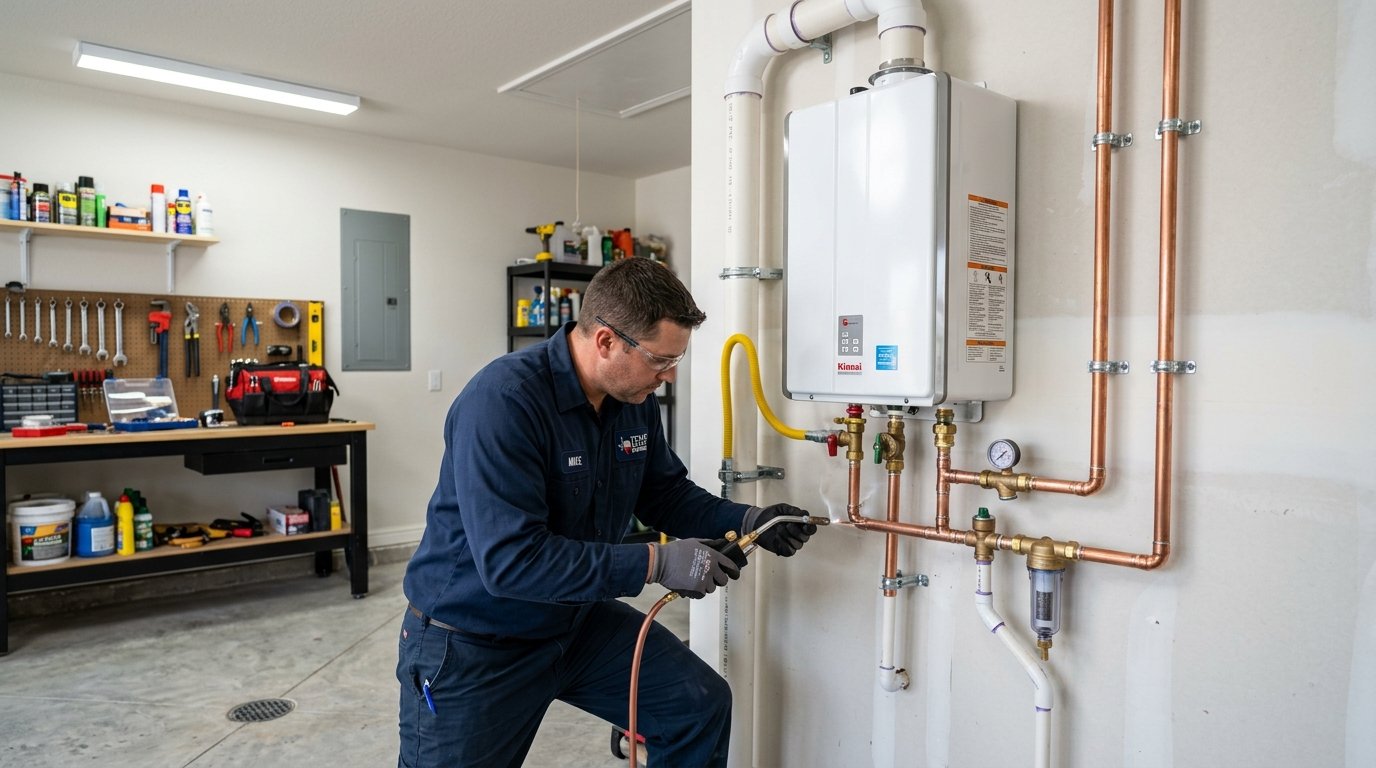
Dependable Hot Water Solutions for San Antonio Homeowners
Hot water is an indispensable modern comfort for showering, dishwashing, laundry, and maintaining household sanitation. When your water heater breaks down, producing lukewarm water or leaking across garage and closet floors, you need immediate, decisive assistance from licensed trade professionals.
Omega Plumbing connects homeowners in San Antonio and surrounding Bexar County communities with verified independent plumbing contractors who specialize in water heating technology. From same-day thermocouple and heating element repairs to turn-key natural gas, electric, hybrid heat pump, and high-efficiency tankless water heater installations, our network delivers reliable performance and code-compliant safety.
The San Antonio Hard Water Challenge: Calcium Scaling and Tank Failure
Water heaters in San Antonio operate in an unusually hostile chemical environment. Because our municipal supply originates from the limestone strata of the Edwards Aquifer, tap water carries exceptionally high levels of dissolved calcium carbonate and magnesium ions, frequently exceeding 18 grains per gallon.
When cold water enters a water heater and reaches operating temperatures between 120 and 140 degrees Fahrenheit, dissolved minerals rapidly precipitate out of solution, coating heating surfaces in a dense layer of mineral scale:
- Insulation of Heat Exchangers: In gas water heaters, calcium deposits settle at the base of the tank, forming an insulating barrier up to four inches thick between the burner flame and the water. The gas burner must fire longer and hotter to transfer heat, causing metal fatigue, microscopic fissures in the glass tank lining, and premature tank rupture.
- Electric Element Burnout: In electric units, calcium scale encapsulates upper and lower heating elements. Deprived of water cooling, the heating coils overheat and short-circuit within months of installation.
- Sediment Rumbling and Popping: As water trapped underneath the scale crust boils, pocketed steam violently erupts, creating loud popping or banging noises known as kettle boiling.
- Reduced Storage Capacity: Heavy sediment accumulation displaces stored water volume, reducing a 50-gallon tank to 35 gallons of usable hot water.
Comprehensive Diagnostic Troubleshooting Guide for Common Failures
When a water heater malfunctions, licensed plumbing technicians perform systematic electrical and pneumatic diagnostics to identify the root component failure:
- No Hot Water (Gas Models): Plumbers test thermocouple millivolt output, inspect electronic spark igniters, verify gas supply manifold pressure, and examine pilot burner orifices for spider webs or lint clogs.
- No Hot Water (Electric Models): Technicians use calibrated digital multimeters to measure 240-volt power supply at the junction box, test high-limit reset buttons (ECO switch), and perform continuity resistance checks across upper and lower immersion heating elements.
- Inconsistent or Lukewarm Water: Often caused by a broken internal plastic dip tube. When the dip tube fractures, incoming cold water mixes directly with hot water at the top of the tank instead of being directed to the bottom for heating.
- Discolored or Smelly Hot Water: Bacterial reactions with decomposing magnesium sacrificial anode rods can produce sulfurous rotten-egg odors. Technicians replace degraded rods with powered titanium or zinc-aluminum alloy anode rods to neutralize odors.
Tankless vs Conventional Storage Tank Water Heaters
When replacing an aging water heater in Bexar County, property owners must choose between traditional storage tank systems and modern on-demand tankless technology. Each system offers distinct operational advantages:
| Feature / Performance Factor | Conventional Storage Tank (Gas/Electric) | High-Efficiency Tankless (Gas/Electric) | Hybrid Heat Pump (Electric) |
|---|---|---|---|
| Average Lifespan in San Antonio | 6 to 10 Years (without softener) | 15 to 20 Years (with annual flushing) | 12 to 15 Years |
| Energy Efficiency (UEF Rating) | 0.58 to 0.65 UEF | 0.82 to 0.96 UEF (Energy Star) | 3.40 to 4.00 UEF (Ultra Efficient) |
| Hot Water Delivery Capacity | Limited to tank volume (40-50 Gallons) | Continuous, unlimited on-demand flow | High storage plus rapid heat recovery |
| Physical Space Requirement | Large footprint (16-24 sq ft floor space) | Compact wall-hung unit | Standard floor footprint |
| Energy Cost Savings | Standard baseline operating costs | Up to 34% energy bill reduction | Up to 70% electricity reduction |
Sizing Calculations: Matching Your Household Demand
Selecting the correct capacity is critical for ensuring reliable hot water during peak morning routines. Independent contractors calculate sizing based on proven engineering formulas:
- Storage Tank Sizing (First Hour Rating): For conventional tanks, plumbers calculate the First Hour Rating (FHR), which measures the number of gallons of hot water the unit can supply in one hour starting with a full tank. A typical four-person home in Stone Oak with multiple bathrooms requires an FHR between 65 and 80 gallons.
- Tankless Sizing (GPM and Temperature Rise): For tankless units, sizing depends on maximum simultaneous flow rate in Gallons Per Minute (GPM) and the required temperature rise. In San Antonio, winter groundwater entering homes averages 55 degrees Fahrenheit. To reach an output of 120 degrees, the unit must achieve a 65-degree temperature rise while running showers (2.5 GPM), kitchen sinks (1.5 GPM), and washing machines (2.0 GPM) concurrently.
Essential Safety Components and San Antonio Building Code Compliance
Water heaters are pressurized vessels that generate immense thermal energy. Faulty installations can lead to structural fires, severe scalding, or catastrophic pressure explosions. Network contractors ensure that every installation satisfies the International Plumbing Code and City of San Antonio Development Services Department requirements:
- Temperature & Pressure Relief (T&P) Valve: A safety valve calibrated to open automatically if internal water temperature exceeds 210 degrees Fahrenheit or pressure exceeds 150 PSI. The discharge pipe must extend downward to within six inches of the floor or terminate outdoors.
- Thermal Expansion Tank: When municipal backflow preventers or pressure-reducing valves create a closed plumbing loop, expanding hot water has nowhere to go. An expansion tank with an internal rubber bladder absorbs this pressure surge, protecting fixtures and tank welds.
- Corrosion-Resistant Pan & Drain Line: Water heaters installed inside closets, attics, or finished living spaces must sit in a watertight aluminum or composite drain pan with an indirect drain line routed to the exterior.
- Gas Sediment Traps (Drip Legs): A capped vertical pipe tee installed before the gas control valve to capture metal shavings and pipe scale before they foul the burner orifice.
- Direct-Vent Combustion & Carbon Monoxide Safety: Proper B-vent or concentric PVC flue venting to safely exhaust combustion gases outside the building envelope.
Preventative Maintenance and Annual Descaling Flushes
Routine maintenance doubles the operational lifespan of water heating equipment in Bexar County. Network specialists perform comprehensive preventative service visits:
- Sacrificial Anode Rod Inspection: Traditional tanks contain a magnesium or aluminum anode rod that deliberately corrodes to protect the steel tank from rust. Replacing the anode rod every 3 to 5 years prevents tank corrosion.
- Hydro-Sediment Flushes: Flushing the tank with cold water agitation removes loose calcium gravel before it solidifies into permanent stone.
- Tankless Acid Circulation Descaling: Circulating a food-grade virgin citric acid or white vinegar solution through tankless copper heat exchangers for 45 minutes dissolves all mineral scale, restoring factory heat transfer rates.
What to Do Immediately During a Catastrophic Water Heater Leak
If your water heater tank has ruptured and is actively flooding your property, follow this emergency shutdown procedure immediately:
- Shut Off the Cold Water Supply: Locate the dedicated cold water shutoff valve situated directly above the water heater on the cold inlet pipe. Turn the lever 90 degrees or turn the wheel clockwise until tightly closed.
- Turn Off the Energy Source: On natural gas units, rotate the thermostat gas dial on the front of the tank to the OFF position. On electric units, locate your home electrical service panel and switch off the double-pole 30-amp circuit breaker labeled Water Heater.
- Relieve Internal Tank Pressure: Open a hot water faucet at the lowest sink or bathtub in your house to relieve internal vacuum pressure and slow the rate of tank leakage.
- Call Our Dispatch Desk: Contact our 24/7 hotline at +1 210 305 7088 to have an emergency water heater replacement specialist dispatched to your San Antonio home.
Professional Service Coverage Across San Antonio
Whether you require emergency gas control replacement in Alamo Heights, heating element rebuilds in Medical Center apartments, or whole-home tankless retrofits in The Dominion, Helotes, or Alamo Ranch, our contractor network is on call 24 hours a day, 7 days a week.
24/7 San Antonio Water Heater Emergency Dispatch
Do not endure cold showers or risk catastrophic water leaks. Call our 24/7 hotline at +1 210 305 7088 right now to connect directly with a licensed, insured water heater specialist in your neighborhood.