
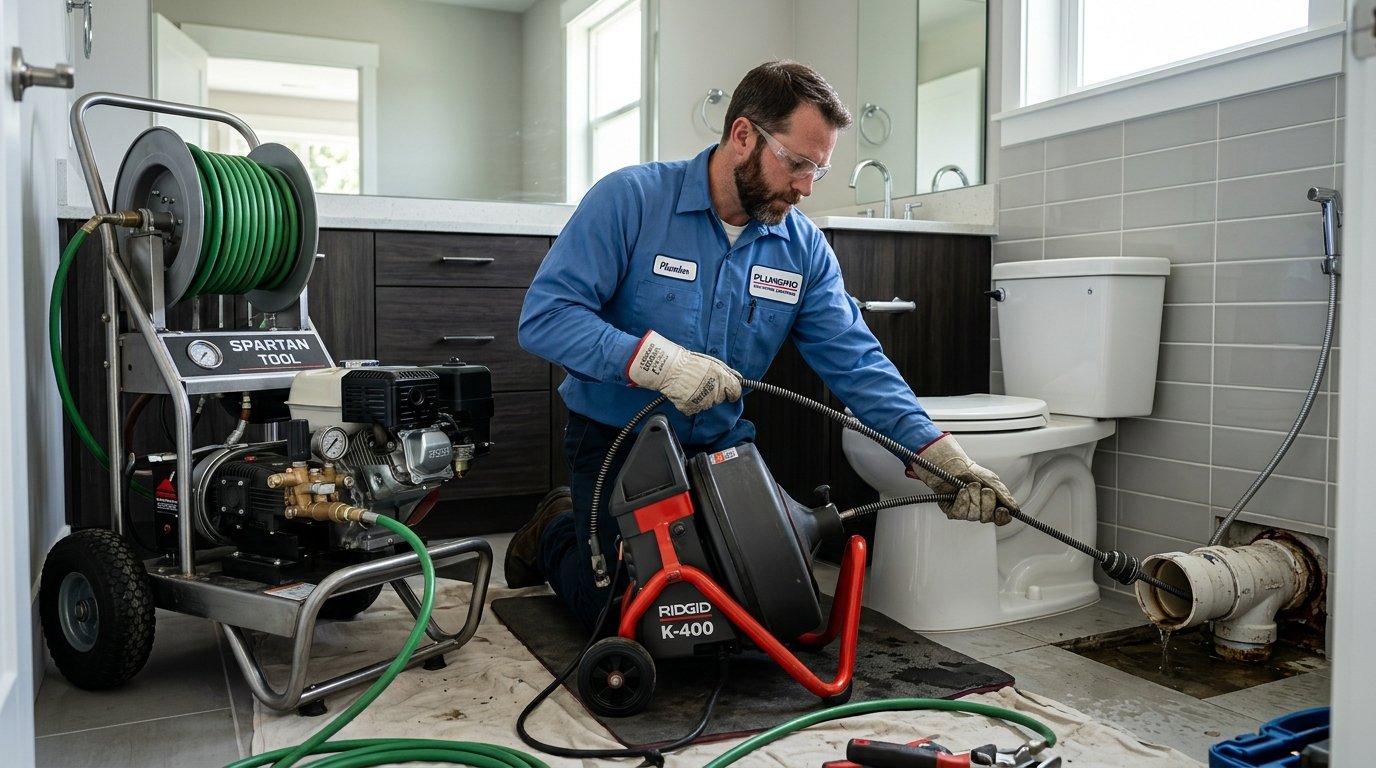
Modern Sewer Restoration: No Trenching, No Ruined Landscaping
For decades, repairing a collapsed or root-infested residential sewer main meant tearing up your front yard, destroying expensive stone pavers, slicing through concrete driveways, and cutting through the root systems of heritage Texas live oak trees. Heavy backhoes excavated 6-to-10-foot-deep trenches across entire properties, creating massive disruptions, dust, and thousands of dollars in landscape restoration bills.
Today, Omega Plumbing connects homeowners across San Antonio and Bexar County with specialized sewer contractors equipped with cutting-edge trenchless rehabilitation technology. Utilizing advanced Cured-In-Place Pipe (CIPP) lining and hydraulic pipe bursting, technicians renew deteriorated underground sewer pipes entirely from existing cleanout access points—restoring full hydraulic flow and creating a brand-new, root-proof structural pipe that lasts over half a century.
Trenchless Rehabilitation vs. Traditional Open-Trench Excavation
Compare the engineering advantages, financial implications, and timeline of modern trenchless pipe lining versus conventional trench excavation:
| Comparison Factor | Trenchless CIPP Lining / Bursting | Traditional Open-Trench Digging |
|---|---|---|
| Lawn & Landscape Impact | Zero surface excavation; work performed via cleanouts | Massive trenches destroying lawns, trees, and driveways |
| Project Completion Time | Typically 1 to 2 business days | 5 to 10 days of excavation, pipe laying, and backfill |
| Post-Repair Restoration Cost | $0 (no landscaping, asphalt, or concrete repairs) | $3,000 to $10,000+ for driveways, sod, and masonry |
| Joint Sealing & Root Defense | 100% seamless joint-free epoxy or fused HDPE (zero joints) | Fittings every 10 to 20 feet (vulnerable to future roots) |
| Structural Design Lifespan | 50+ Year manufacturer design life | 30 to 50 Years (subject to shifting clay ground stresses) |
Unique Regional Factors Damaging San Antonio Sewer Pipes
Underground sewer lines across Bexar County face environmental hazards unique to South Central Texas geology and climate:
- Aggressive Native Tree Root Infestation: During severe San Antonio summer droughts, the water table drops dramatically. Majestic heritage live oaks, mature pecan trees, and cedar elms seek underground moisture by sensing the humid condensation escaping from clay and cast iron sewer joints. Microscopic hair roots enter the joint, feeding on wastewater nutrients until dense fibrous root tapestries completely block the pipe. If you have an active clog, our network provides immediate commercial drain cleaning & hydro jetting.
- Expansive Montmorillonite Clay Movement: San Antonio is situated over deep beds of highly plastic montmorillonite clay. When local soils swing from extreme summer drought to torrential autumn thunderstorm inundation, subterranean soil volumes shift drastically. This ground displacement causes brittle clay sewer pipes to shear, crack, or develop deep "bellies" (low points where toilet paper and waste sediment pool and create stubborn blockages).
- Aging Cast Iron Channelling & Corrosion: Homes constructed prior to 1980 in historic communities like Alamo Heights, King William, Monte Vista, and Terrell Hills typically have cast iron sewer laterals. Decades of exposure to hydrogen sulfide sewer gas and acidic wastewater cause the bottom invert of the cast iron pipe to channel away, allowing wastewater to seep directly into sub-foundation soil.
Step-by-Step Fiber-Optic Video Inspection & Trenchless Process
Referred sewer rehabilitation specialists follow a rigorous, code-certified diagnostic and lining protocol:
- High-Definition Fiber-Optic Video Inspection: A self-leveling color sewer camera with built-in LED illumination is navigated through the lateral line. The technician monitors the pipe condition in real time, measuring the exact distance and depth of cracks, root balls, and soil collapse with a 512 Hz radio sonde.
- Mechanical Descaling & High-Pressure Hydro Jetting: Before a structural liner can be installed, internal pipe walls must be scoured clean. High-speed chain-knocker descalers remove calcified rust scale from cast iron, while 4000 PSI hydro jetters flush away grease, sludge, and tree root fibers.
- Epoxy Saturation & Liner Inversion: A customized felt tube calibrated to your pipe’s exact internal diameter is impregnated with a two-part commercial epoxy resin matrix. Using compressed pneumatic air, the liner is inverted through the damaged pipe, conforming perfectly to every contour.
- Thermal or UV Curing: Pressurized steam, hot water, or ultraviolet light arrays are passed through the tube, accelerating the chemical polymerization process. Within 2 to 4 hours, the resin hardens into a rock-solid, glass-smooth structural pipe within the old host pipe.
- Final Video Verification & Flow Testing: A post-installation video camera run inspects the cured pipe to certify complete joint seal, structural integrity, and unrestricted waste velocity before reconnecting to the SAWS municipal lateral.
Understanding SAWS Sewer Lateral Jurisdiction
Under San Antonio Water System (SAWS) policy, the property owner is entirely responsible for the maintenance and structural integrity of the private building sewer from the exterior wall of the structure all the way to the connection fitting at the public sewer main in the street or alley. If your lateral line backs up or collapses, municipal utility crews will not repair it; you must contract a licensed Texas master plumber.
Serving Greater San Antonio & Surrounding Communities
Trenchless sewer line contractors in our network serve residential neighborhoods and commercial districts throughout Bexar County, including Alamo Heights, Stone Oak, King William, Monte Vista, the Medical Center District, The Dominion, Helotes, Alamo Ranch, Southtown, Schertz, Castle Hills, Leon Valley, Hollywood Park, Terrell Hills, Shavano Park, Elm Creek, Timberwood Park, Cibolo, Converse, and Live Oak.
If your foundation is experiencing subterranean water erosion or unexplained toilet rocking, learn more about our toilet repair & flange resets or non-invasive electronic leak detection.
Schedule a 24/7 San Antonio Sewer Video Inspection
Stop recurring sewer backups and eliminate tree root clogs permanently without destroying your yard. Call our 24/7 dispatch desk at +1 210 305 7088 right now to connect with a licensed, vetted trenchless sewer repair contractor in San Antonio, TX.