
If you have lived in San Antonio for even a couple of months, you are undoubtedly familiar with the crusty white build-up around your sink faucets, cloudy water spots on fresh glassware, and dry skin after every shower. What many homeowners do not realize is that the chalky mineral film you see on your counters is only a tiny fraction of the problem—the most expensive destruction happens silently out of sight inside your water heater, pipes, and valves.
At Omega Plumbing, our team of licensed Texas master plumbers combats the consequences of hard water daily across San Antonio and Bexar County. With tap water sourced almost entirely from underground limestone formations, local homes face some of the highest mineral concentrations in the United States. Without adequate treatment, untreated hard water can shorten the lifespan of household appliances by up to 50% and trigger unexpected plumbing disasters.
💧 San Antonio Water Hardness Overview
- Primary Source: Edwards Aquifer (natural limestone and dolomite karst formation)
- Hardness Range: 15 to 22 Grains Per Gallon (GPG) / 250 to 375+ mg/L (ppm)
- USGS Rating: Extremely Hard (anything exceeding 10.5 GPG is classified as "Very Hard")
- Annual Mineral Deposit: Up to 18–25 lbs of rock-hard calcium scale formed per household yearly
- Recommended Solution: Whole-house metered ion-exchange water softening systems
Why Is San Antonio Water So Notoriously Hard?
Water hardness is a direct measurement of dissolved polyvalent mineral ions, predominantly calcium ($Ca^{2+}$) and magnesium ($Mg^{2+}$). While these minerals are completely harmless to human health, their mechanical behavior inside plumbing systems is relentlessly destructive.
More than 90% of San Antonio’s tap water is pumped from the deep limestone caverns of the Edwards Aquifer. As rain falls over the Texas Hill Country recharge zone across northern Bexar, Comal, and Medina counties, it absorbs carbon dioxide from the air and soil, becoming slightly acidic. This acidic groundwater dissolves millions of tons of limestone bedrock over decades.
By the time this water reaches residential taps in communities from Stone Oak and Alamo Ranch to Alamo Heights and Medical Center, it is super-saturated with dissolved limestone. The moment this water is heated, depressurized, or left to evaporate, the minerals drop out of liquid solution and solidify into rock-hard calcite scale.
Top Warning Signs of Hard Water in Your San Antonio Home
Hard water affects every single fixture and water-supplied appliance in your home. Here are the primary signs San Antonio homeowners should watch out for:
1. Crusty Mineral Deposits (Limescale)
Stubborn chalky white or greenish crust cementing around faucet aerators, shower spray nozzles, and sink drains that resists ordinary soap and water.
2. Water Heater "Kettling" & Popping
Deep rumbling, popping, or sizzling sounds coming from your water heater tank as trapped boiling water bubbles up through thick layers of calcified sediment.
3. Declining Water Pressure
A progressive loss of shower and faucet pressure as mineral scale gradually coats the interior diameter of water pipes and blocks flow restrictors.
4. Soap Scum & Itchy Skin
Soaps, shampoos, and body washes struggle to lather, creating a sticky insoluble soap curd that clogs skin pores, dries hair, and coats glass shower enclosures.
5. Etched Glassware & Scratchy Laundry
Drinking glasses come out of the dishwasher cloudy or permanently etched, while bath towels and clothing feel stiff, rough, and fade prematurely.
6. Premature Appliance Failures
Dishwashers, washing machines, coffee makers, and ice makers suffering repeated valve seizures, heating element burnouts, and premature motor breakdowns.
How Hard Water Destroys Your Home's Plumbing Infrastructure
While cosmetic spots and spotty dishes are frustrating, the real expense of hard water comes from the damage it inflicts on hidden plumbing components. Over time, unconditioned Edwards Aquifer water takes a severe toll on every part of your home’s system:
1. Water Heater Scaling & Energy Waste
Water heaters bear the brunt of hard water damage. Heat accelerates the precipitation of calcium carbonate, turning dissolved minerals into a dense rock layer at the bottom of standard tank heaters or inside the tight copper passages of tankless units.
This calcified layer functions as thermal insulation. Just one-quarter inch of limescale reduces heat transfer by up to 28%, forcing your water heater to run longer, consume significantly more gas or electricity, and endure severe bottom-plate thermal stress. In tankless units, scale rapidly triggers overheating error codes and emergency shutdowns. Scheduling timely water heater installation and descaling repair helps restore heating efficiency and prevents premature tank ruptures.
2. Faucet Cartridge Seizure & Valve Leaks
Modern faucets rely on delicate ceramic disc cartridges, internal springs, and rubber gaskets to control water volume and temperature. When abrasive mineral grit passes through supply lines, it scratches ceramic seals and shreds rubber O-rings.
The result is dripping spouts, squeaking handles, and stuck diverter valves in showers. Instead of struggling with corroded fixtures or low flow, our comprehensive faucet, sink, and shower plumbing services can replace worn cartridges, clear mineral clogs, and restore full water pressure.
3. Pipe Calcification & Pinhole Leaks
Over years of exposure, mineral scale builds up layer by layer inside copper, galvanized, and PEX piping, constricting water flow like plaque inside an artery. This causes noticeable drops in household water pressure, especially when multiple fixtures run simultaneously.
Worse, mineral deposits cause uneven galvanic interactions that can trigger localized pitting corrosion beneath the scale layer. In copper plumbing systems, this frequently results in hidden pinhole leaks behind drywall or underneath foundation slabs. When older piping systems are compromised beyond repair, professional whole-home repiping and pipe repair with high-grade PEX-A pipe provides a durable, permanent remedy that resists future mineral scaling.
4. Calcified Drains & Main Line Blockages
Hard water damage does not stop at the faucet—it continues right down your drains. When dissolved calcium bonds with soap fats, grease, and hair, it forms insoluble calcium stearate curds. These solidify into hard deposits inside P-traps, disposal lines, and sewer branches.
Store-bought chemical drain cleaners are ineffective against calcified curd and can corrode your drainage pipes. Clearing stubborn mineral blockages requires commercial rooter cables or high-pressure professional drain cleaning services to flush pipes clean without causing pipe wall damage.
5. Hidden Slab Leaks & Pressure Damage
When mineral scale restricts water channels while municipal main pressure remains elevated, excessive hydraulic stress builds up against weakened pipe fittings. In San Antonio, where shifting black clay soil already exerts pressure on foundations, scaling can accelerate under-slab pipe breaches.
If you notice unexplained spikes in your water bill, warm spots on your tile flooring, or damp carpet, immediate diagnostic investigation is critical. Our master technicians utilize state-of-the-art acoustic and thermal non-invasive leak detection equipment to pinpoint concealed leaks without tearing up your foundation needlessly.
San Antonio Water Hardness vs. National Benchmarks
To understand why San Antonio homes experience such rapid scale accumulation, examine how local water measures against official Water Quality Association (WQA) standards:
Effective Solutions: How to Protect Your San Antonio Home
You do not have to settle for ruined plumbing fixtures, skyrocketing utility bills, or early appliance replacements. Modern water treatment systems can neutralize mineral hardness right at the point where water enters your property.
1. Whole-House Ion-Exchange Water Softeners (The Proven Gold Standard)
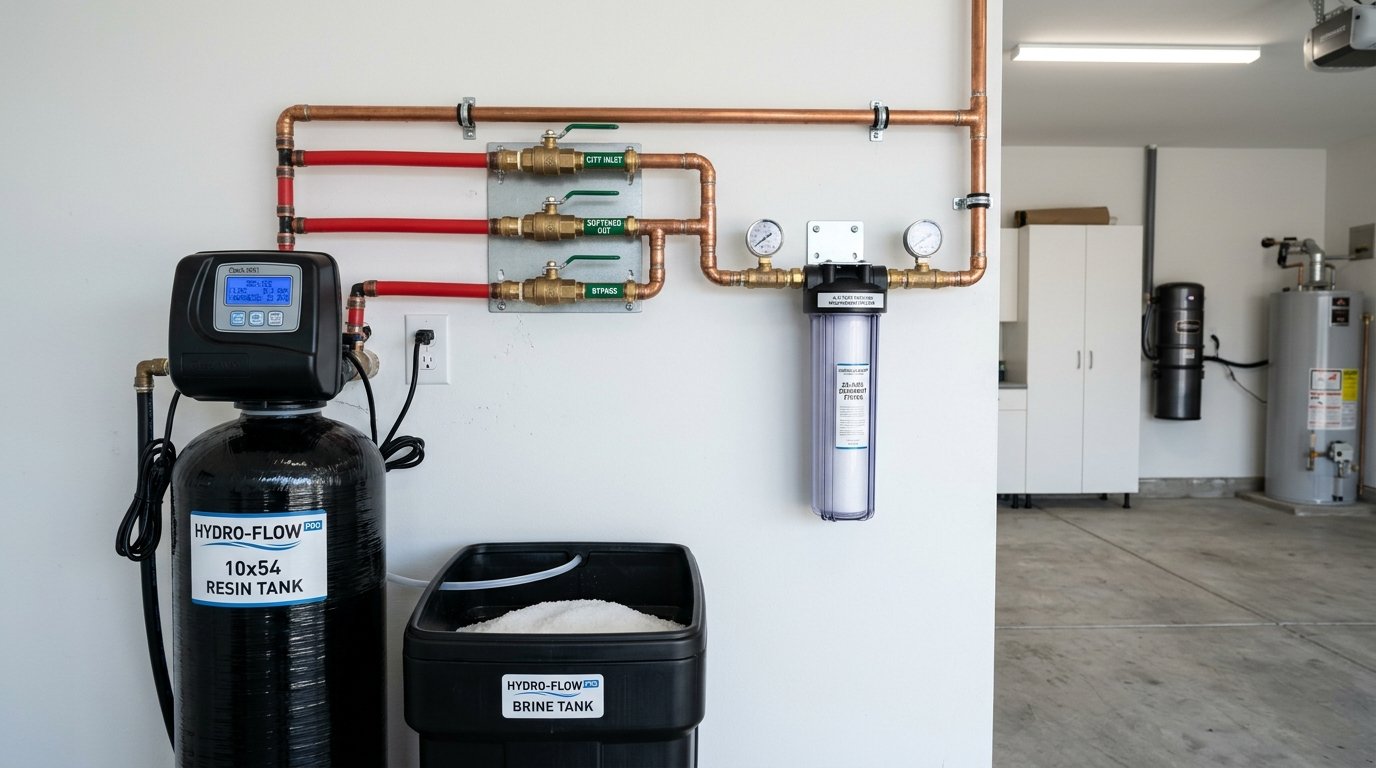
For the extreme 15–22+ GPG mineral levels found across Bexar County, traditional ion-exchange water softeners offer the only complete, long-term solution. These systems feature a pressure vessel filled with food-grade polystyrene resin beads. As hard Edwards Aquifer water flows across the resin bed, positively charged calcium and magnesium ions adhere magnetically to the beads, releasing harmless sodium or potassium ions in their place.
The water exits the system with less than 1 grain of hardness—producing luxuriously soft water for bathing, laundry, dishwashing, and plumbing preservation. During automated demand-regeneration cycles, a brine solution flushes accumulated minerals safely out to the drain. Investing in professional water softener and filtration installation shields every pipe, valve, and heater in your house round-the-clock.
2. Multi-Stage Reverse Osmosis (RO) Drinking Systems
While an ion-exchange softener treats your working water, an under-sink Reverse Osmosis (RO) system provides pure, pristine drinking and cooking water. By driving pressurized water through a semi-permeable membrane with pores as small as 0.0001 microns, RO units eliminate up to 98% of total dissolved solids (TDS), heavy metals, micro-plastics, chlorine, and residual sodium.
3. Salt vs. Salt-Free Conditioners in San Antonio
Salt-free conditioners (TAC systems) utilize template-assisted crystallization to transform dissolved calcium into inactive microscopic crystals that do not stick to surfaces easily. While TAC systems require no electricity or salt, they do not lower actual GPG hardness or stop soap scum formation. Given San Antonio’s extreme hardness levels, salt-free conditioners alone frequently fall short of protecting tankless water heaters and fixture aerators.
📐 How to Size a Water Softener for Your San Antonio Home
An undersized unit will regenerate constantly, wasting gallons of water and bags of salt, while an oversized unit risks resin channeling. Use this proven formula:
Example for a 4-person family in Bexar County: 4 people × 75 gallons = 300 gallons daily. 300 × 20 GPG = 6,000 grains removed per day. Across a standard 7-day regeneration cycle, you need 42,000 grains of capacity. We typically recommend a 48,000 to 64,000-grain high-efficiency unit to provide adequate reserve capacity during peak usage.
Essential Maintenance Checklist for Hard Water Homes
Protect your investment with these regular preventative maintenance practices:
- Annual Water Heater Flush: Drain 5 to 10 gallons from the bottom spigot once per year to purge accumulated sediment. For tankless heaters, flush the heat exchanger with a recirculating food-grade vinegar solution for 60 minutes.
- Monthly Brine Tank Inspection: Ensure salt pellets fill at least half the brine tank. Check for hard crusts ("salt bridges") that prevent water from contacting the salt bed.
- Semi-Annual Aerator Cleaning: Unscrew sink and shower aerators, submerge them in warm distilled white vinegar for 30 minutes, and brush away mineral crumbs to preserve high flow.
- Monitor Water Meter for Hidden Leaks: Periodically check your water meter dial when no water is running in the house. If the indicator is spinning, you may have an unaddressed pinhole leak caused by hard water pipe corrosion.
Frequently Asked Questions About Hard Water in San Antonio
How hard is the tap water in San Antonio, TX?
San Antonio tap water is officially classified as "extremely hard," typically ranging between 15 and 22 grains per gallon (GPG), which translates to 250 to 375+ parts per million (ppm). According to the U.S. Geological Survey (USGS), any reading above 10.5 GPG is classified as very hard, meaning San Antonio water carries nearly double the national severe hardness threshold.
Why is San Antonio water so hard?
San Antonio obtains the majority of its municipal drinking water from the Edwards Aquifer, a vast underground limestone karst formation. As rainwater percolates through hundreds of feet of calcium- and magnesium-rich limestone and dolomite bedrock, it dissolves immense concentrations of mineral salts before being pumped into residential mains.
What signs indicate that hard water is damaging my home plumbing?
Common warning signs include chalky white limescale around faucet aerators and showerheads, popping or rumbling noises in your water heater tank (kettling), stiff washed clothes, cloudy etched glassware, soap that refuses to lather, sudden drops in shower water pressure, and persistent mineral rings in toilet bowls.
Can hard water ruin a water heater?
Yes. When hard water is heated above 120°F, dissolved calcium precipitates out and forms rock-hard scale on the tank floor and electric heating elements. Just 1/4 inch of mineral scale reduces energy efficiency by up to 28% and can cause premature tank overheating or heat exchanger failure in tankless systems.
What is the best water softener system for San Antonio homes?
A whole-home ion-exchange water softener equipped with a metered digital demand-regeneration valve is the gold standard for Bexar County. These systems magnetically extract calcium and magnesium ions and replace them with harmless sodium or potassium ions, reducing hardness from 20+ GPG down to under 1 GPG throughout your home.
Do salt-free water conditioners work well in San Antonio?
Salt-free conditioners (TAC systems) alter mineral crystallization so scale does not stick as easily to flat pipe walls, but they do not physically remove minerals or reduce GPG hardness. Due to San Antonio’s extreme 15–22 GPG hardness, salt-free conditioners often prove inadequate for tankless water heaters and fixture protection compared to traditional ion-exchange systems.
Protect Your San Antonio Home From Hard Water Today
Whether you need a new high-efficiency water softener installed, your water heater descaled, or emergency repairs on mineral-corroded pipes, Omega Plumbing is here to help 24/7. Licensed master plumbers, upfront pricing, and trusted local service across Bexar County.
Call For Water Softener Solutions: +1 210 305 7088